About the Congress
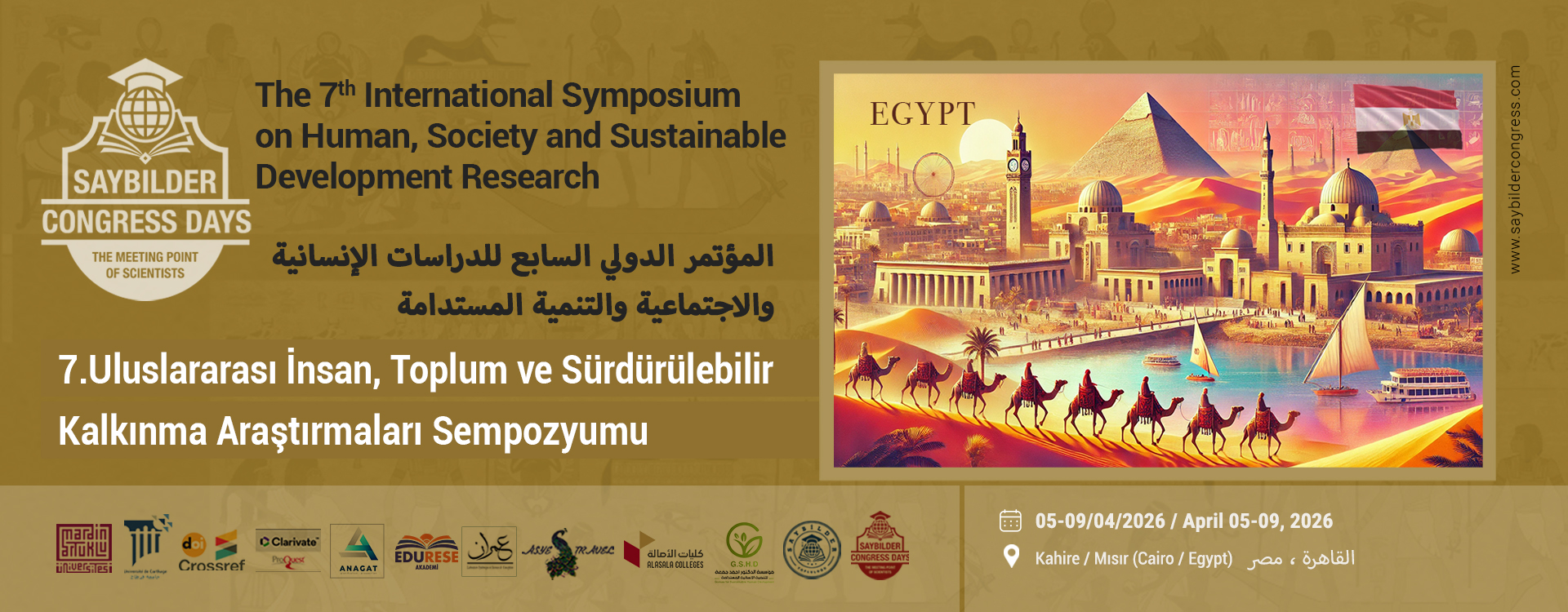
The rapidly changing global landscape places new responsibilities on the human and social sciences. The complex challenges emerging across diverse fields—from education to international relations, and from economics to history—can only be adequately understood through an interdisciplinary lens. In response to this need, the 7th International Symposium on Human, Society, and Sustainable Development Research offers a comprehensive scientific platform that unites multiple areas of knowledge under one roof.
The symposium aims to showcase scientific contributions that adopt a human-centered perspective, prioritize social development, and advance sustainable growth. Accordingly, it provides an inclusive environment for sharing innovative research drawn from a broad and multidisciplinary academic spectrum.
With strong academic backing from leading institutions such as Mardin Artuklu University (Türkiye), Carthage University (Tunisia), and Al Asala Colleges (Saudi Arabia), the symposium welcomes a diverse community of participants, from emerging scholars to established experts. The event will serve as a dynamic forum for exchanging new insights, sharing field research, exploring methodological innovations, and discussing practical solutions.
📍5–9 April 2026, Cairo – The Crossroads of Science and History
The symposium will be held in Cairo, the capital of Egypt—homeland of science and one of the most ancient civilizations in human history. This major event will not only include academic presentations but also offer a unique cultural program designed to explore Egypt’s historical richness, natural beauty, and cultural heritage.
Alongside the scientific sessions, participants will enjoy cultural tours along the Nile, dinner cruises, visits to ancient temples, museum tours, and the distinctive atmosphere of Cairo—providing an unforgettable experience where science and history come together.
🌐The Universality of Science and the Diversity of Cultures: A Shared Future
This symposium invites participants to reflect comprehensively on the present and future of humanity by bringing together voices from various disciplines. The universality of science, the diversity of cultures, and the shared aspirations of societies converge on this platform.
We cordially invite you to join this significant scientific event, which not only promotes the exchange of knowledge but also opens doors to new collaborations, cultural interactions, and long-lasting academic connections. Every paper presented here serves not merely as a research contribution, but as a bridge that brings societies, cultures, and academic traditions closer together.
We look forward to meeting you on the path of knowledge for the shared future of humanity.
Symposium Organizing Committee
MAIN TOPICS
Human and Social Studies
- Human behavior, identity, belonging, and cultural interaction
- Social change, modernization, and societal transformation
- Migration, diaspora, and social integration
- Gender studies, family structures, and social roles
- Community psychology and intergenerational relations
- Social impacts of artificial intelligence and technological transformation
Educational Sciences and Digital Learning
- Quality, inclusiveness, and equal opportunity in education
- Digital transformation and evolving teacher roles
- Multilingual education and intercultural communication
- Assessment, evaluation, and learning analytics
- Education policies and sustainable school models
- AI-supported teaching, learning, and content development
Linguistics, Literature, and Cultural Production
- Linguistics, syntax, phonology, and semantics
- Foreign language teaching and translation studies
- World literature, textual analysis, and narratology
- Digital literature and media language
- Cultural production and discourse analysis
- AI-driven language processing, literary analysis, and translation technologies
Religious Studies
- Sociology, psychology, and anthropology of religion
- Comparative history of religions
- Islamic studies, Qur’anic and Hadith research
- Spirituality, ethics, and social life
- Religious education and values teaching
- AI-assisted analysis of religious texts and ethical debates
Sports Sciences and Healthy Living
- Exercise physiology and performance assessment
- Athlete health, injuries, and rehabilitation
- Sports psychology and motivation
- Sociology and culture of sports
- Sports management and sustainable sports policies
- AI-based performance analysis, data-driven training, and injury prediction
International Relations, Diplomacy, and Global Studies
- Regional security and the international system
- Global governance and international organizations
- Public diplomacy and cultural diplomacy
- Migration, refugee policies, and human rights
- Conflict resolution and peace processes
- AI, cyber diplomacy, and algorithmic security
Economics, Development, and Sustainability
- Sustainable development and economic models
- Green economy and circular economy
- Development economics and income equality
- Entrepreneurship, employment, and social economy
- Energy policies and carbon neutrality
- AI-based economic models, financial forecasting, and data analytics
History, Civilization, and Cultural Heritage
- Ancient civilizations and historical processes
- Ottoman, Egyptian, Mediterranean, and African histories
- Preservation and management of cultural heritage
- Wars, societies, and social transformation
- History of science and thought
- AI in historical data analysis, archaeological modeling, and digital heritage
Environment, Climate, and Natural Resources
- Climate change and environmental risks
- Water resources and food security
- Sustainable cities, urbanization, and environmental planning
- Biodiversity and wildlife conservation
- Waste management and environmental technologies
- AI-driven climate modeling, ecosystem monitoring, and environmental analytics
Law, Human Rights, and Justice
- International law and human rights
- Environmental law and sustainability legislation
- Right to education and health; social justice
- Ethics, governance, and public policy
- Digital law and data security
- AI ethics, algorithmic justice, and legal regulations
Media, Communication, and Digital Culture
- Digital citizenship and social media
- Disinformation and media literacy
- Visual culture, documentary studies, and media analysis
- Algorithmic communication and digital platforms
- Digital identity, privacy, and data culture
- AI-assisted content creation, media analytics, and communication ecosystems
Terms of Participation
Conditions for Participation
- The online participation fee is 50 EUR. Even if a paper has multiple authors, only one author is required to pay the registration fee.All authors listed in the paper will receive participation certificates.
- The face-to-face presentation fee is 450 EUR, covering four nights of accommodation in a double room with breakfast for one participant. For a single room, the fee is 600 EUR.
- The face-to-face presentation + excursion program fee is 750 EUR, including four nights of all-inclusive accommodation in a double room. A 150 EUR supplement applies for a single room. (See the Excursion Program section for details.)
- External participants are not accepted. Presentations are limited to authors staying at the symposium hotel.
- Participants are required to comply with symposium guidelines and all submission deadlines.
- Types of participation:
- Oral Presentation
- Poster Presentation
- Special Session / Workshop
- Listener
- All abstracts and full papers are subject to review and approval by the Evaluation Committee. Papers that do not receive two positive referee reports will not be accepted.
Presentation Evaluation Process
- Submission and Initial Check
- Authors submit their papers through the online system or via email
- The secretary (assistant editor) checks the manuscript for scope, formatting, and similarity rate.
- No content analysis is conducted at this stage; the evaluation is purely formal.
- Manuscripts that do not comply may be rejected or returned for revision.
- Referee Assignment and Review
- Each paper is sent to two expert reviewers.
- Reviewers evaluate the scientific quality, methodology, reliability of findings, and contribution to the literature.
- The process is double-blind: authors and reviewers remain anonymous.
- Decision by the Chair of the Organizing Committee
- Based on referee reports, the editor (Committee Chair) issues one of the following decisions:
- Accept,
- Minor/Major Revision,
- Reject.
- Revision and Resubmission
- Authors revise their papers according to reviewer comments.
- Major revisions are sent back to the reviewers.
- Minor revisions are checked only by the editor.
- Final Evaluation and Invitation Letter
- The Committee Chair conducts the final review of revised papers.
- Papers meeting all criteria receive an acceptance and invitation letter.
- For rejected submissions, a detailed justification is provided.
Program Preparation and Publication Process
- Accepted papers (for the Abstract Book and Full Paper Book) and the Symposium Program are prepared for publication by editors appointed by the Organizing Committee.
- The program coordinator schedules presentation times and halls.
- Publication editors format and typeset the manuscripts.
- Authors may submit their full papers until the deadline specified in the symposium calendar. Full papers will be published as an ISBN-registered electronic book.
Ethical Principles and Appeal Process
- All stages of the symposium strictly adhere to academic ethics and personal rights.
- Appeals must be submitted via email to the symposium secretariat.
- The secretariat forwards appeals to the Committee Chair.
- Technical errors originating from the symposium are corrected immediately.
- Expert opinions may be requested in cases of scientific disputes.
- No procedural step may be skipped, and no participant may be disadvantaged.
- The symposium fully complies with international academic ethics and publication standards.
- At least one professor-level academic has been officially appointed by partner universities for oversight.
- All participants and committee members are obligated to follow ethical guidelines.
- Authors bear full responsibility for any unethical behavior detected during or after presentation.
- All abstracts and full papers must comply with international ethical standards.
- Similarity rates must be below 25%.
- Authors may not claim royalties for published works.
Types of Presentations
- Oral Presentation(Presentation: 10–15 minutes • Q&A: 3–5 minutes)
- Poster Presentation (Poster size: 70 cm × 100 cm, vertical)
- Special Session / Workshop (Duration: 30–45 minutes)
Note: External participants are not allowed. Presentations are restricted to authors staying at the symposium hotel.
Rules
This guide outlines all the steps required for preparing, submitting, and evaluating abstracts and full papers for the 7th International Symposium on Human, Society, and Sustainable Development Research.
Participant Qualifications
- Academics, graduate students, and independent researchers wishing to deliver an oral presentation
- Researchers preparing a poster presentation
- Educators and academics proposing special sessions or workshops
Note: External participants are not accepted. Participation is limited to registered authors only.
Abstract Submission
Abstract Guidelines
- Word count: 250–350 words
- Presentation languages: Turkish – English – Arabic
- (Authors whose presentation language is not English must include an English translation of the abstract.)
- Abstracts must include:
- Topic, purpose, methodology, findings, and conclusion
- 3–5 keywords must be added after the abstract
File Format
- Word file (.docx)
- Calibri, 11 pt
- Single line spacing
Submission Method
- Through the symposium website OR
- Via email: congressinegypt@gmail.com
- All accepted abstracts will be published in an ISBN-registered electronic abstract book.
Full Paper Submission (Optional)
Submitting a full paper is optional.
Full Paper Guidelines
- 3000–6000 words
- Word file (.docx)
- Calibri, 11 pt
- APA 7 reference style
- Tables and figures must be numbered
Publication
- After evaluation, all full papers will be published in an ISBN-registered electronic full paper book.
Evaluation Process
Initial Check
Conducted by the secretary (assistant editor):
- Scope suitability
- Formatting compliance
- Similarity (plagiarism) check
(Only formal evaluation is conducted at this stage; content is not reviewed.)
Peer Review
- Each paper is reviewed by two experts in the field
- Double-blind review process
- Possible outcomes:
- Accept
- Minor revision
- Major revision
- Reject
Revision Process
- Authors must revise their papers according to reviewer comments
- Major revisions are re-evaluated by reviewers
- Minor revisions are checked by the editor only
Final Decision and Invitation Letter
- The Chair of the Organizing Committee issues the final decision
- Official invitation letters are sent to authors of accepted papers
Publication Principles and Ethical Guidelines
- Similarity rate must be below 25%
- Authors are individually responsible for any unethical practices
- No copyright or royalty claims may be made on published works
Important Notes
- For online presentations, only one author is required to pay the registration fee regardless of the number of authors.
- For face-to-face presentations, accommodation fees are charged per person.
- All authors’ names and affiliations must be correctly stated in the submission.
- External participants are not admitted to the symposium.
- Submissions must follow the official timeline.
- Please contact us for any questions regarding the symposium.
CALENDAR
Importantdatesforthe 7th International Symposium on Human, Society, andSustainable Development Researchare as follows:
Key Dates:
📝DeadlineforAbstractSubmission: 27 February 2026
🧾RegistrationDeadline: 1 March 2026
🗂Program PublicationDate: 15 March 2026
📘AbstractBookPublicationDate: 25 March 2026
📄Full PaperSubmissionDeadline: 1 June 2026
📚Full PaperBookPublicationDate: 15 July 2026
Presentation Dates:
💻Online Presentations: 7–8–9 April 2026–Zoom
🎤Face-to-FaceSessions: 6 April 2026 – Cairo, Egypt
ℹ️ImportantNotes:
Note 1: Transfer fromtheairporttothe hotel is theresponsibility of theparticipants. InCairo, airporttaxiscostapproximately10 USDtothe hotel.
Note 2: A freeshuttle service fromthe hotel totheairportwilldepart at 11:00 AM on thereturnday.
Egypt – CairoCultural&Scientific Program (April 5–9, 2026)
🟩Day 1 – April 5 | Arrival in Cairo
Arrival at Cairo International Airport
Transfer tothe hotel &check-in
Free time throughouttheday
Dinner: At the hotel
🟩Day 2 – April 6 | Symposium Program &NileRiverCruise
09:00 – Symposiumsessions
Lunch&coffee break
Afternoonsessionscontinue
16:00 – End of thedaily program
Evening: Dinnercruise on theNileRiver (2 hours)
Overnightstay at the hotel
🟩Day 3 – April 7 | Full-DayCairo City Tour
Breakfast at the hotel
Symposiumsessions
VisittotheGizaPyramids&theSphinx
Perfume Workshop &Papyrus Workshop
SaladinCitadel
Al-AzharMosque
Al-HusseinMosque
Khan El-KhaliliBazaar
Return tothe hotel
Evening: Dinner&overnightstay
🟩Day 4 – April 8 | Culture& Entertainment Day
Breakfast at the hotel
Symposiumsessions
Visittothe Grand EgyptianMuseum
Evening: EgyptianNightentertainment at the hotel
Dinner&overnightstay
🟩Day 5 – April 9 | Cairo – Departure
Check-out afterbreakfast
Transfer totheairport&returnjourney
💶Package&Pricing Information
Per Person in a DoubleRoom
€750 – Toursincluded (Accommodation, meals, tours: allinclusive)
€450 – Toursexcluded (Room + breakfastonly)
SingleRoomSupplement
€150addedtotheabovepackages
✔ Services Included in thePrice
4 nightsaccommodation (hotel)
Breakfast, lunch, anddinner
Turkish-speakingtourguide
GizaPyramids&Sphinx (entranceticketsincluded)
NileRiverdinnercruise
Perfume&Papyrus Workshop visits (entranceincluded)
SaladinCitadel (entranceticketincluded)
Al-AzharMosque
Al-HusseinMosque
Khan El-KhaliliBazaar
Grand EgyptianMuseum (entranceticketincluded)
EgyptianNightentertainment
Note:Workshopswill be heldsubjectto time availability.
❌ Services Not Included
Round-trip airfare
Cairovisa on arrivalfee
Greenpassportholdersareexempt
Travel healthinsurance
International departuretaxstamp
VENUE
Infantry House (Dar Zobat Al-Moshat / دار ضباط المشاه للقوات المسلحة) – Cairo
Address: Ismail Bridge, next to Al-Fangari Bridge, Mansheyat Al Bakri, Heliopolis, Cairo Governorate, Egypt
Location Details: Located on Salah Salem Street, beside Al-Fangari Bridge, Near Kobri Al-Qobba Military Hospital and Fathallah Market, Within walking distance of the metro station.
COMMITTEES
Honorary Chairs of the Symposium
Prof. Dr. İbrahim Özcoşar – Rector, Mardin Artuklu University, Türkiye
Prof. Dr. Mounir Dhouib – President of the Research Laboratory GADEV/UMRAN (ENAU) – University of Carthage, Tunisia
ORGANIZING COMMITTEE
Chairs of the Organizing Committee
Prof. Dr. Hatem Fahad Hanoo – University of Mosul, Iraq
Prof. Dr. Gehan Anwar Deeb – October 6 University, Egypt
Prof. Dr. Najem Dhaher – Carthage University, Tunisia
Members of the Organizing Committee
Prof. Dr. Gehan M. AnwarDeeb – October 6 University – Egypt
Prof. Dr. Hatem FahadHanoo – University of Mosul – Iraq
Prof. Dr. Mastura A. Efhema – Lancaster University, United Kingdom
Prof. Dr. Muhammad Matarneh – Tafila Technical University – Jordan
Prof. Dr. Muoftah A M Bataw – Omar Almokhtar University, Libya
Prof. Dr. Najem Dhaher –Carthage University – Tunisia
Prof. Dr. Ömer Bozkurt – Mardin Artuklu University – Türkiye
Prof. Dr. Said Assil – Regional Center for Education and Training Professions – Morocco
Prof. Dr. Sami Baskın – Tokat Gaziosmanpaşa University – Türkiye
Prof. Dr. Sid Ahmed Sofiyane – University of Annaba – Algeria
Prof. Dr. Yasser Ahmad – Assiut University – Egypt
Assoc. Prof. Dr. Ayfer Erdoğan – Yıldız Teknik University, Türkiye
Dr. Basman Nawaf Fathi Al-Rashidi – Al-Asala Colleges, Kingdom of SaudiArabia
Dr. Esat Layek – Tokat Gaziosmanpaşa University – Türkiye
Dr. Salem bin Ahmed bin Rashid Al-Muslihī – Al Sharqiyah University, Sultanate of Oman
Basma Berro – Slovenya
Mohammad DaloulMjaidel (Lower) -Kuwait
Organizing Committee Member Assigned by the University
Prof. Dr. Ömer Bozkurt – Mardin Artuklu University, Türkiye
Evaluation Committee
Chair of the Evaluation Committee
Prof. Dr. Sid Ahmed Sofiyane – University of Annaba, Algeria
Prof. Dr. Said Assil – Regional Center forEducationand Training Professions, Morocco
Members of the Evaluation Committee
Prof. Dr. Ali Al Tawansi – Damanhour University, Egypt
Prof. Dr. Amal Omar Abd El-Hameed – Benha University, Egypt
Prof. Dr. Amina Al-Yamallahi – Mohammed V University – Morocco
Prof. Dr. Bahaa Eddin Mazid – Sohag University, Egypt
Prof. Dr. Entiha Abbas Aliwi–Al-Mustansiriya University– Iraq
Prof. Dr. Fawzia Labid – Regional Center forEducationand Training Professions – Morocco
Prof. Dr. Gehan M. Anwar Deeb – October 6 University, Egypt
Prof. Dr. Hajjaj Abdel Fattah– University of Bechar – Algeria
Prof. Dr. Hakim Mousa Abdulhassanawi –Ministry of Education, Open Educational College – Iraq
Prof. Dr. Hala Sorour – Sadat Academy, Egypt
Prof. Dr. Hanaa El-Qazaz – October 6 University, Egypt
Prof. Dr. Hasnaâ Bazghoud – Regional Center for Educationand Training Professions, Oujda – Morocco
Prof. Dr. Hasnaâ Flaki – Hassan II University – Morocco
Prof. Dr. Hatem Fahad Hanoo – University of Mosul, Iraq
Prof. Dr. Hatice Demirbaş – Ankara Haci Bayram Veli University
Prof. Dr. Ilham Al-Soussi Al-Abdalloui – Mohammed V University – Morocco
Prof. Dr. İzzet Karakulak – Mardin Artuklu University, Türkiye
Prof. Dr. Mastura A. Efhema– Lancaster University, United Kingdom
Prof. Dr. Mohammed S. Al-Rsa’i – Al-Hussein Bin Talal University, Jordan
Prof. Dr. Moulay Abdelmalek Al-Daoudi – Ibn Tofail University – Morocco
Prof. Dr. Muhammad Matarneh – Tafila Technical University, Jordan
Prof. Dr. Muoftah A. M. Bataw– Omar Al-Mokhtar University, Libya
Prof. Dr. Nadia Zakri – University of Tlemcen – Algeria
Prof. Dr. Najem Dhaher – Carthage University, Tunisia
Prof. Dr. Nuh Doğan – OndokuzMayıs University, Türkiye
Prof. Dr. Omaima Ghanem – AinShamsUniversity – Egypt
Prof. Dr. Omar Ahmed Saeed–University of Mosul– Iraq
Prof. Dr. Omima Ghanem – Ain Shams University, Egypt
Prof. Dr. Omrani Jay Sana – Sidi Mohamed Ben AbdellahUniversity – Morocco
Prof. Dr. Ömer Bozkurt – Mardin Artuklu University, Türkiye
Prof. Dr. Safia Igueroufa – Mouloud Mammeri University of Tizi-Ouzou, Algeria
Prof. Dr. Said Assil – Regional Center for Education and Training Professions, Morocco
Prof. Dr. Sami Baskın – Tokat Gaziosmanpaşa University, Türkiye
Prof. Dr. Sid Ahmed Sofiyane– University of Annaba, Algeria
Prof. Dr. Tamo Ait Mbarek – Mohammed V University – Morocco
Prof. Dr. Yasser Ahmad – Assiut University, Egypt
Assoc. Prof. Dr. Ali Yıldırım – TokatGaziosmanpaşa University, Türkiye
Assoc. Prof. Dr. Amany Hafiz – October 6 University, Egypt
Assoc. Prof. Dr. Ayfer Erdoğan – Yıldız Teknik University, Türkiye
Assoc. Prof. Dr. Ender Eyuboğlu – Bartın University, Türkiye
Assoc. Prof. Dr. Mehmet Ayas – TokatGaziosmanpaşa University, Türkiye
Assoc. Prof. Dr. Ramazan Diler – TokatGaziosmanpaşa University, Türkiye
Assoc. Prof. Dr. Ufuk Sözcü – TokatGaziosmanpaşa University, Türkiye
Dr. Ali Rajem– University of M’sila – Algeria
Dr. Al-Sayed M. Wassel – October 6 University, Egypt
Dr. Habibi Yahyaoui – Batna 2 University – Algeria
Dr. JaydaaSeyam – Abu DhabiPolytechnicUniversity – UAE
Dr. KharroubiNawal – TlemcenUniversity, Algeria
Dr. KhawlaManna‘ –ChérifMessaadiaUniversity, SoukAhras – Algeria
Dr. Kübra Alarçin – Kırklareli University, Türkiye
Dr. Liqaa Khalil Ismail Yahya Al-Ghazali– Nineveh Education Directorate, Ministry of Education– Iraq
Dr. Mihriban Artan Ok – Nevşehir Hacı Bektaş Veli Üniversitesi, Türkiye
Dr. Murat Balcı – İstanbul Aydın University, Türkiye
Dr. Mustafa Sercan Çakmak – Mercedes-Benz Otomotiv, Türkiye
Dr. Nadir Menderes – Gaziantep University of IslamicSciencesandTechnology, Türkiye
Dr. NawalKharoubi – University of Tlemcen – Algeria
Dr. Nurcan Bekil Çakmak – Istanbul Beykent University – Türkiye
Dr. Nurcan Bekil Çakmak – İstanbul Beykent University, Türkiye
Dr. Ragheed Heatham Meenb– Nineveh Education Directorate, Ministry of Education– Iraq
Dr. Rawah Abdul Sattar Ali–University of Baghdad –Iraq
Dr. Şaban Banaz – TokatGaziosmanpaşa University, Türkiye
Dr. Said Saleh – University of Biskra – Algeria
Dr. Salem bin Ahmed bin Rashid Al-Muslihī – Al Sharqiyah University, Sultanate of Oman
Dr. Samar Gheni Hussien Alhamadani–University of Baghdad – Iraq
Dr. Sanaa Abdul-Razzaq Hassan–University of Baghdad– Iraq
Dr. Semra Taydaş Osman – RWTH Aachen University, Germany
Dr. Ulvican Yazar – Istanbul Gelisim University, Türkiye
Dr. WalidMaddour – Constantine 2 University – Algeria
Dr. Wasan Zeno Hamad–University of Mosul– Iraq
Dr. WihibaDerbali – University of M’sila, Algeria
Lecturer Aklid Abd al-Mughith – Cadi Ayyad University, Morocco
Lecturer Bengü Kaymak – Akdeniz Karpaz University, TRNC